Maharishi Mahesh Yogi

Tony Nader, MD, PhD, MARR

News | Insights | Stories
Advancing careers in holistic health
Maharishi AyurVeda Practitioner Stories
Interview with Feli Hoo – Graduate of the Professional Training in Maharishi AyurVeda at Alma Mater Europaea University in Maribor, Slovenia.
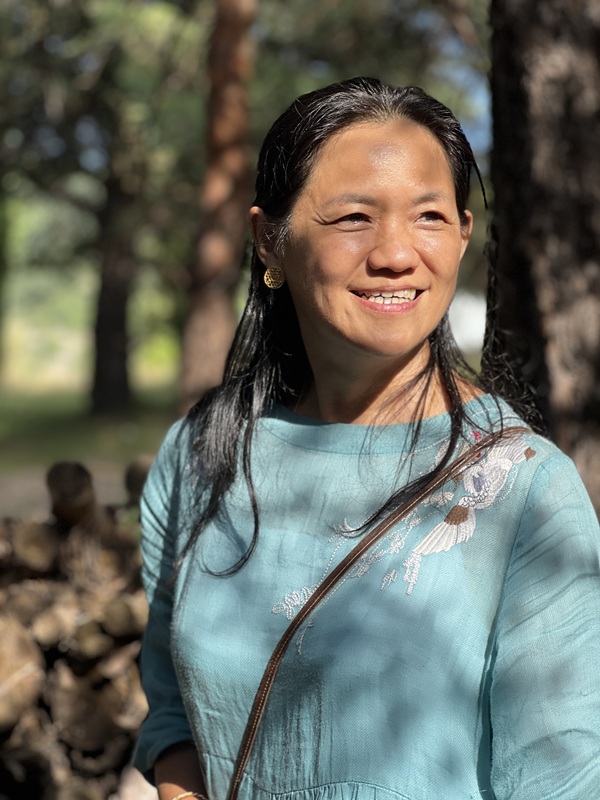
Feli Hoo, a Malaysian Maharishi AyurVeda practitioner since 2017, has served over a thousand clients across Asia. With advanced certifications in Ayurveda, Aromatherapy, and Marma Therapy, she offers personalized sessions blending ancient wisdom with modern techniques. Feli’s intuitive approach, combined with Transcendental Meditation instruction, has helped clients achieve holistic healing and improved well-being. Feli is the first Chinese lady to obtain an Ayurveda practitioner license from the Malaysian Ministry of Health.
What inspired you to become an Ayurveda Consultant, and how did your journey into Maharishi AyurVeda begin?
For as long as I can remember, I’ve had the desire to help people. But I also knew that to truly help, I needed proper skills and proven methods. While living in Denmark, I was already practicing aromatherapy and had even learned pulse diagnosis from a teacher in India. Still, I felt something was missing — I wanted deeper knowledge, systematic training, and formal qualification.
That’s when I discovered the Professional Training in Maharishi AyurVeda at Alma Mater Europaea University in Slovenia — the only one of its kind in Central Europe. I traveled there four times a year. The tuition and expenses were not cheap, but every trip felt worthwhile. The curriculum was comprehensive, covering everything from pulse diagnosis to pharmacology, and gave me the solid foundation I was searching for.
Most of my classmates were experienced medical doctors, pharmacists, and healthcare professionals. I was accepted because of my clinical work with my then-husband, a psychiatrist, and my consultation experience in Malaysia. Although I was surrounded by seasoned professionals, the training gave me the confidence to grow into my own role as an Ayurveda consultant.
What was it like to participate in the hybrid study format at Alma Mater Europaea University in Slovenia? What insights did you gain during the training?
The hybrid format was both demanding and deeply rewarding. Every two weeks, we had evening classes online from 7 p.m. until almost midnight — the time difference made it tiring, but the content was so rich that I always felt energized afterward. The programme required us to complete case studies and reports, which kept the learning practical and immediately applicable.
Three times a year, I also traveled to Slovenia for in-person training, usually staying about ten days. Those sessions were unforgettable. Professors guided us directly, and we even practiced live pulse readings with local patients. That hands-on element brought the knowledge to life in a way no textbook could.
One of my most memorable teachers was Dr Gordana, who is both a Western medical doctor and an Ayurvedic doctor. Her approach was refreshingly honest — once, she very directly told a patient to stop using tampons. I usually speak more gently, but her candor inspired me to be more straightforward when necessary. It was a reminder that honesty, when delivered with compassion, can be a form of healing too.
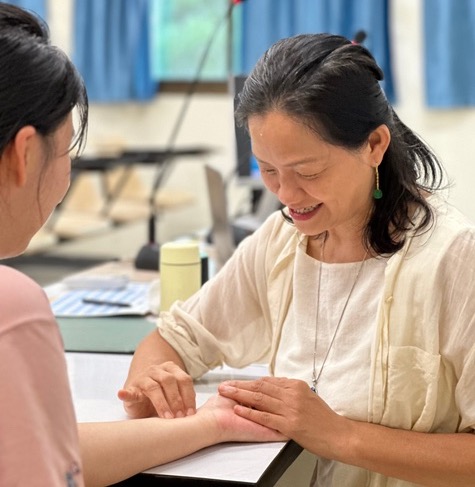
Beyond the technical skills, the training gave me a new way of relating to clients. I learned not just to analyze imbalances through pulse reading, but also to communicate in a way that uplifts rather than frightens. For example, I now begin by acknowledging a client’s strengths before discussing areas of imbalance. That small shift creates trust and opens the door for healing.
Overall, the programme was transformative. It gave me confidence, a systematic framework, and the reassurance that I could combine my prior experiences with this deeper training to truly serve my clients with both knowledge and heart.
Could you share your personal story — how you discovered Maharishi AyurVeda and what led you to train in multiple modalities like Aroma and Marma Therapy?
Even before earning my Ayurveda diploma, I had already become a certified aromatherapist through IFPA — the International Federation of Professional Aromatherapists in the UK. We even brought that course to Malaysia, where we trained nearly two hundred professional aromatherapists.
While in Denmark, I felt drawn to explore more healing modalities. That led me to study Marma Therapy and Suksma Marma Therapy with a German doctor Dr Schrott.
I earned my Maharishi Marma Therapy diploma, which is still quite rare in Asia. To this day, I may be the only one here with that particular certification. But for me, the certificate was never the most important thing — what mattered was practice. Over the years, I used Marma Therapy with many clients, helping them release emotional and psychological blockages. Once those blockages are cleared, the body needs nourishment. That’s where Marma became essential — it provided the nourishing phase after detox.
For example, I often worked with the “Hridaya” point at the heart centre. Opening this energy point allowed clients to release emotions and feel lighter, more at peace.
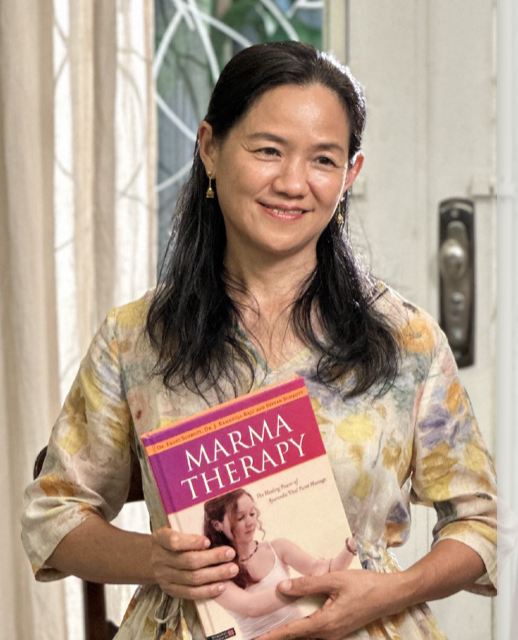
Marma Therapy is one of my greatest passions. It is an ancient practice — about 5,000 years old — rooted in Ayurveda. By working with vital points of the body, we help awaken the body’s own intelligence and self-healing capacity. We don’t “do” the healing; we simply give attention and presence, and the body takes care of the rest.
Can you share a memorable success story from your practice where Maharishi AyurVeda made a significant difference in someone’s life?
One client who touched me deeply was a woman in her late 40s with high cholesterol and uric acid. She looked pale, unhappy, and burdened with resentment. Through pulse diagnosis and healing sessions, including psychodrama, she slowly released these emotional weights. Her transformation was so profound that her husband once exclaimed he could literally see “a light above her head.” To me, that light symbolized her own love shining through after she was given the space to heal. Over time, she became lighter, happier, and even began traveling again.
Another unforgettable case was a woman in her early 40s who had just undergone a total hysterectomy. She hadn’t had time to grieve the emotional loss of her uterus. Through pulse reading, I could still feel the energetic presence of her uterus.
I recommended Maharishi AyurVeda products to balance her hormones, essential oils to uplift her mood, and a symbolic ritual from my psychodrama practice — she buried a red water-filled balloon, representing the uterus, in the earth with flowers and gratitude. After this ritual, she told me she felt whole again, as though her sense of self had returned. She began exercising, eating healthier, sleeping better, and fully resuming her life as a mother. Watching her reclaim her strength and joy was profoundly meaningful for me.
What kinds of health concerns do your clients most often bring to you? How does Maharishi AyurVeda offer unique ways of addressing them?
Many women come to me with hormonal imbalances, fatigue, or stress-related issues. When we go deeper, the root often traces back to emotional wounds — childhood trauma, unresolved grief, or boundary violations. For men, it’s often depression or anxiety, usually triggered by overwhelming responsibilities or personal loss.
Maharishi AyurVeda addresses all of these on multiple levels. In my practice, I use herbs, aromatherapy, Marma Therapy, and psychodrama. But one of the most powerful tools I share is Transcendental Meditation (TM). As a certified TM teacher for 13 years, I have seen again and again how TM helps clients reconnect with their inner silence and accelerate healing.
I remember one woman with depression who described her state as “falling into a black hole.” After her very first TM session, she said it felt as though “a small black bird flew out of her heart.” She rediscovered a sense of bliss and freedom — and she has continued to practice daily ever since. Stories like hers remind me of the unique, transformative power of Maharishi Ayurveda.
How do you help clients apply Maharishi AyurVeda principles in their everyday lives?
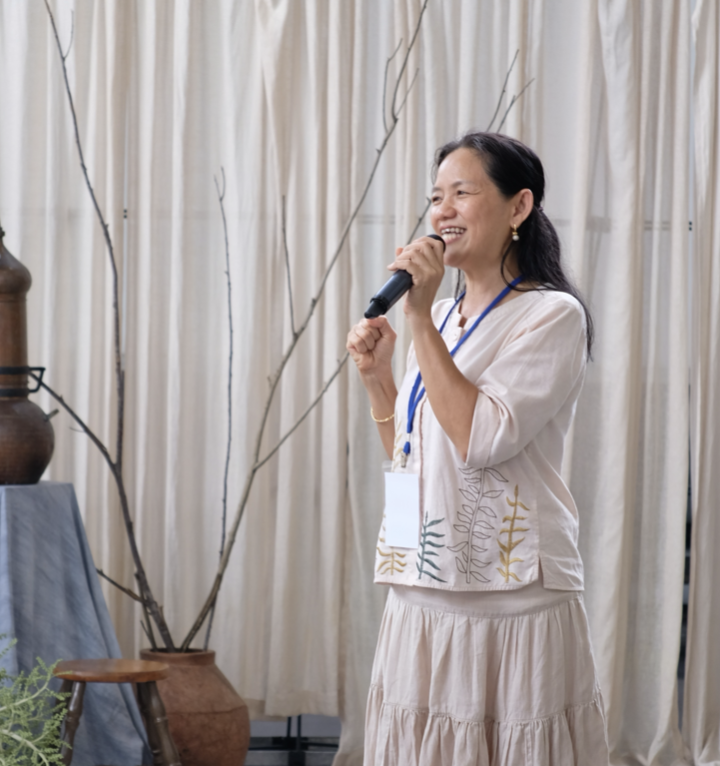
The most practical tool I share is TM. Many people think meditation means trying to control the mind, but TM is the opposite — it’s completely effortless. With a mantra, the mind naturally settles into deep rest, deeper even than sleep. In that state, stress is released and healing begins.
For clients struggling with insomnia, anxiety, or overthinking, TM is often life-changing. I remind them that it’s not about doing more, but about allowing the mind and body to return to their natural state of balance.
What aspect of being an Ayurveda Consultant do you find most fulfilling, and how has it influenced your own growth and well-being?
The most fulfilling part is witnessing transformation. Clients may arrive with insomnia, constipation, or sadness, but after a period of healing, they begin smiling, exercising, and even thriving in their careers. For me, it feels like walking beside them on their journey — never pulling them forward, just opening the door to their own strength.
Personally, this work has also become my teacher. Whenever I remind clients to live in balance, I remind myself as well. To stay grounded, I take weekends off, spend time in my garden, and nurture myself. I believe that only when I am full of love can I truly give love to others.
What advice would you give to someone considering a career as an Ayurveda Consultant, and how has being part of the Maharishi AyurVeda community supported your journey?
My advice is simple: if you feel called, don’t hesitate. Maharishi AyurVeda provides a structured and systematic way to learn, especially through the Alma Mater programme in Slovenia. Unlike some longer trainings in India, this pathway allows you to begin practicing sooner while still gaining deep knowledge.
The investment of around over the years was, for me, absolutely worth it. The training gave me confidence, community, and practical tools to help others. I now encourage my own students to take the course. Recently, one of my pharmacy students decided to enroll, planning to retire early and become a full-time therapist. I was overjoyed!
Malaysia needs more Ayurveda consultants. The more of us there are, the more people we can support on their journey to health and wholeness.